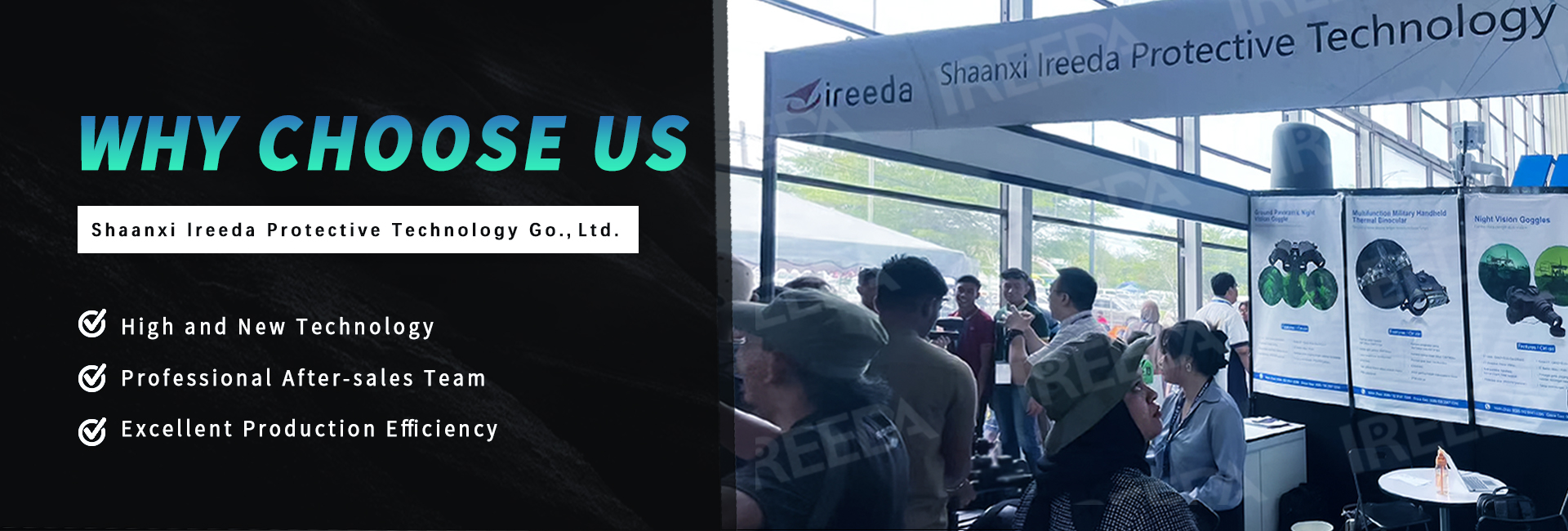
High quality PVS31 binocular fusion night vision device
Shaanxi Ireeda Protective Technology Co., Ltd.
Engineer Manager : Ms.Melin
WhatsApp: +8618291418396
E-mail: melin@ireeda.com
As a multifunctional night vision device, the DA F-PVS31 fusion night vision binoculars takes "small and portable" as the core design concept. At the same time, it reshapes the observation ability in low-light environments with multi-mode imaging technology, becoming an efficient tool in the military, law enforcement and emergency fields.
1. Lightweight design and flexible adaptation
The fuselage is made of high-strength lightweight alloy and engineering polymer composite material. This design is not only suitable for long-term handheld operation (no obvious fatigue when holding with one hand), but also can be fixed on the head through a quick-detachable helmet bracket. It is suitable for tactical helmets, mountaineering helmets and other carriers to meet the needs of dynamic scenes - whether it is a soldier's low-posture movement during crawling reconnaissance or a rescuer's two-handed operation during climbing, it can fit the head stably to ensure a coherent field of vision.
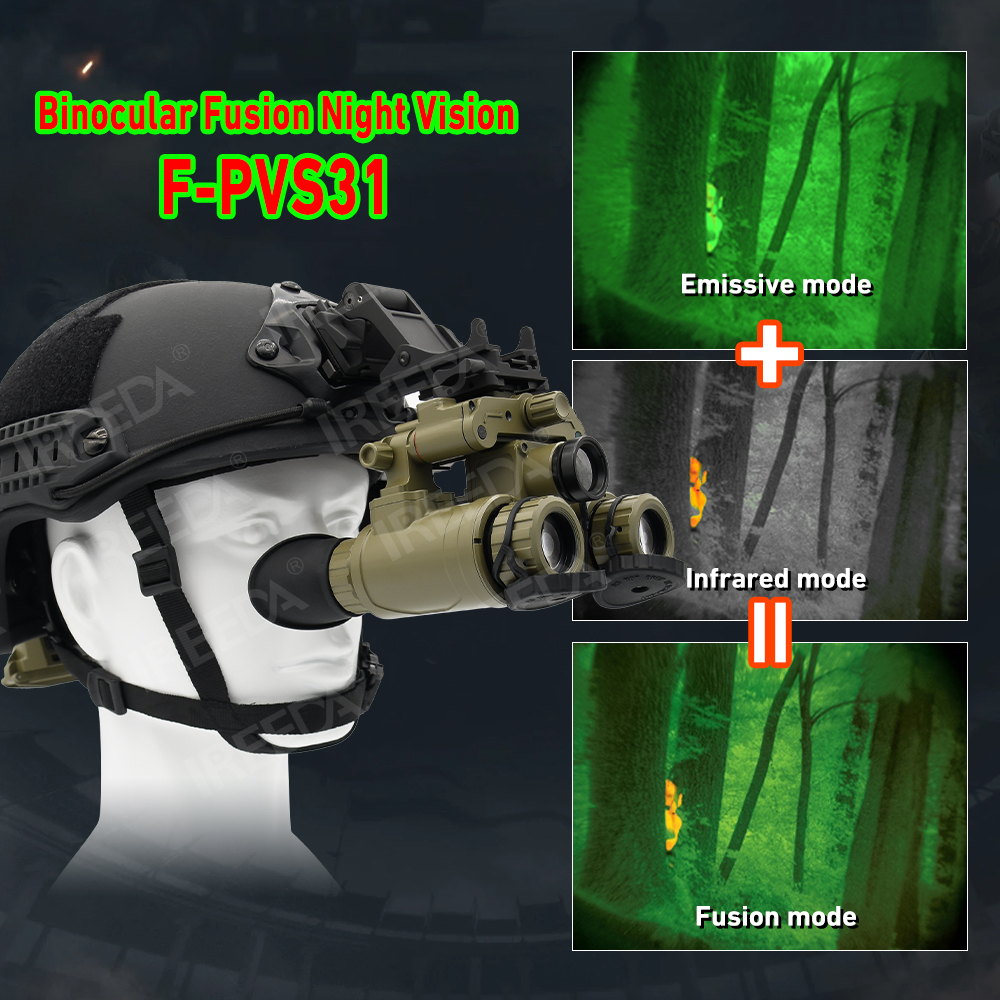
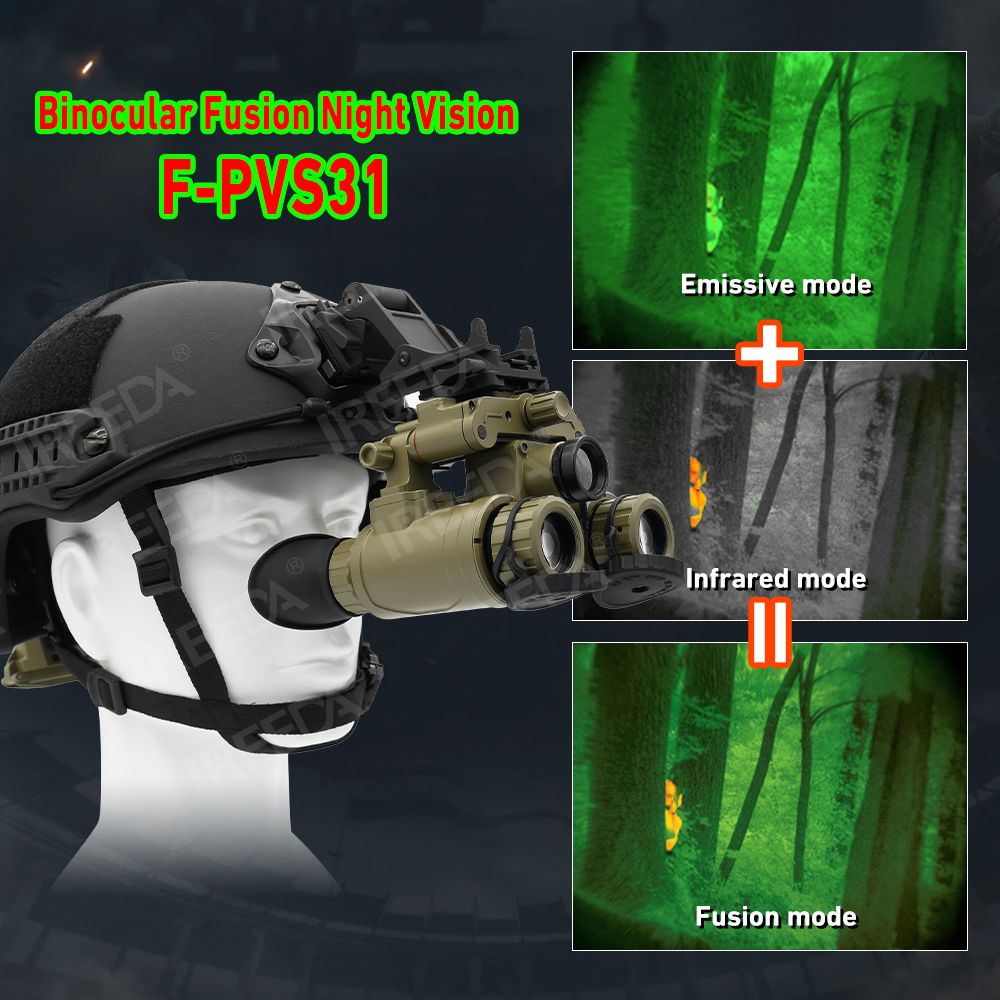
2. Dual-mode fusion imaging technology
As a core advantage, PVS31 seamlessly integrates infrared thermal imaging and low-light enhancement technology to form a complementary observation system:
Low-light mode: In low-light environments such as moonlight and starlight, the third-generation image intensifier tube amplifies the weak light signal by 50,000-100,000 times, outputs high-resolution green images, and the resolution reaches 64-72 LP/mm. The human body outline and handheld device details can be clearly identified within 300 meters;
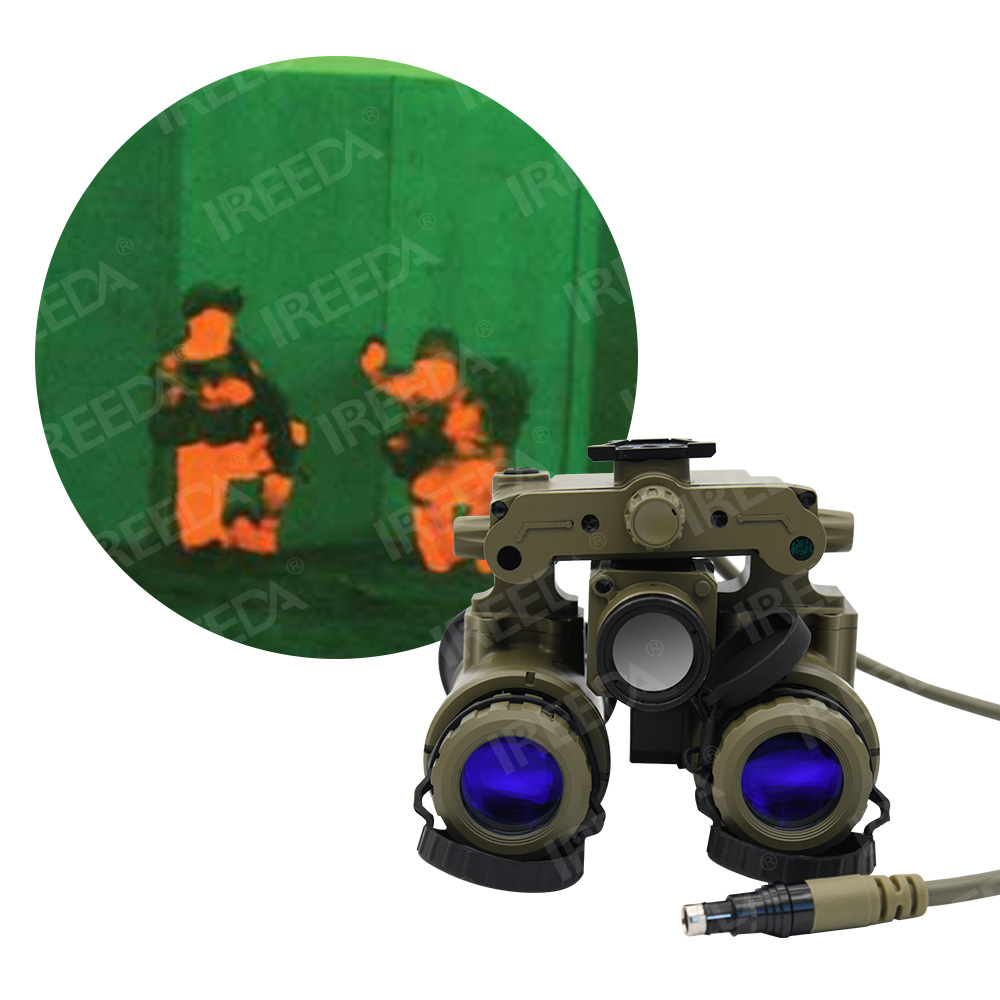
Infrared imaging mode: Actively emit 850nm invisible infrared light (or passively receive the object's own infrared radiation), in extreme environments such as complete lack of light, smoke, and dust, the target is outlined through temperature difference imaging - even if the target is hidden in the bushes or behind the wall, it can be accurately located by the temperature difference between the body temperature and the environment (such as the difference between the human body 37℃ and the environment 5℃);
Fusion algorithm: The built-in image processing chip of the device superimposes the image data of the two modes in real time, forming "low-light details + infrared heat source" on the screen The composite picture not only retains the scene texture (such as terrain undulations and object shapes), but also highlights high-temperature targets (people, heating equipment), solving the pain point of "hidden targets cannot be seen clearly in low light and infrared lacks environmental details" in a single mode.
3. Functional advantages and practical value
Multi-scenario adaptability
According to different task requirements, PVS31 can quickly switch working modes: use low light mode to maintain natural vision during night patrols and save infrared energy consumption; turn on fusion mode during urban ruins rescue to penetrate the smoke and locate the trapped; turn off active infrared during covert reconnaissance and only use passive thermal imaging to avoid exposing the position. Its 120-meter infrared detection distance and 400-meter low light recognition distance can cover the warning range of most tactical scenarios.
Convenience of operation
The body is equipped with an anti-slip knob, which supports single-knuckle adjustment of focus (objective lens focusing range 0.25 meters to infinity) and brightness. The eyepiece can be independently calibrated for diopter to adapt to users with different vision. The battery compartment is compatible with CR123A batteries (single battery life 16 hours) or external tactical battery box (life extended to 40 hours), and can still provide stable power supply in low temperature environment (-30℃), meeting the needs of long-term missions.
Environmental durability
The device reaches IP67 waterproof level and can be immersed in 1 meter of water for 30 minutes. The dustproof performance is suitable for dusty environments such as deserts and jungles. The lens uses anti-reflection film technology to reduce glare and reflection, and can keep the picture clear even in strong reflective scenes such as snow and water.
IV. Typical application scenarios
Military field: Special forces use its lightweight and fusion imaging to quickly identify enemy sentries (infrared heat sources) and surrounding bunkers (low-light details) during night infiltration missions, improving tactical decision-making efficiency;
Emergency rescue: At earthquake or fire scenes, rescuers use infrared mode to penetrate the gaps in collapsed objects, locate survivors' body temperature signals, and use low-light mode to determine the safety of environmental structures;
Border patrol: In unlit wilderness areas, the fusion mode can simultaneously monitor long-distance illegal border crossers (infrared) and terrain obstacles (low-light), and with the map data overlay function, path planning and target tracking can be carried out simultaneously;
Concealed reconnaissance: When wildlife protection personnel or law enforcement officers monitor at night, the passive thermal imaging mode can avoid disturbing the target and clearly record the activity trajectory.
Compared with traditional single-mode night vision devices, the core competitiveness of PVS31 lies in "balancing portability and functionality" - it not only reduces the burden of use through lightweight design, but also breaks through environmental limitations with dual-mode fusion technology, becoming a "perception capability multiplier" in complex low-light scenes.