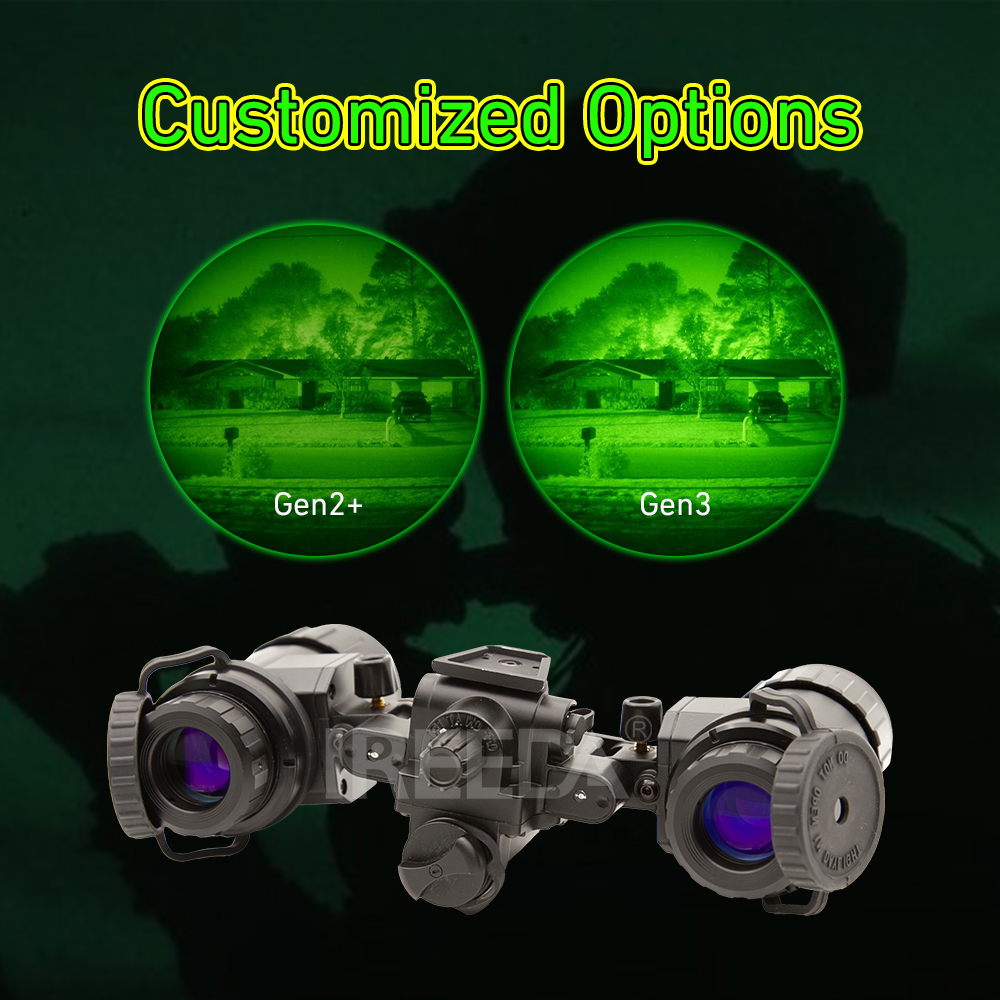
Differences Between PVS18 and PVS31
Shaanxi Ireeda Protective Technology Co., Ltd.
Engineer Manager : Ms.Melin
WhatsApp: +8618291418396
E-mail: melin@ireeda.com
Although both quad-eye and binocular night vision devices enable people to obtain clear vision in dark environments, they have significant differences in several aspects.
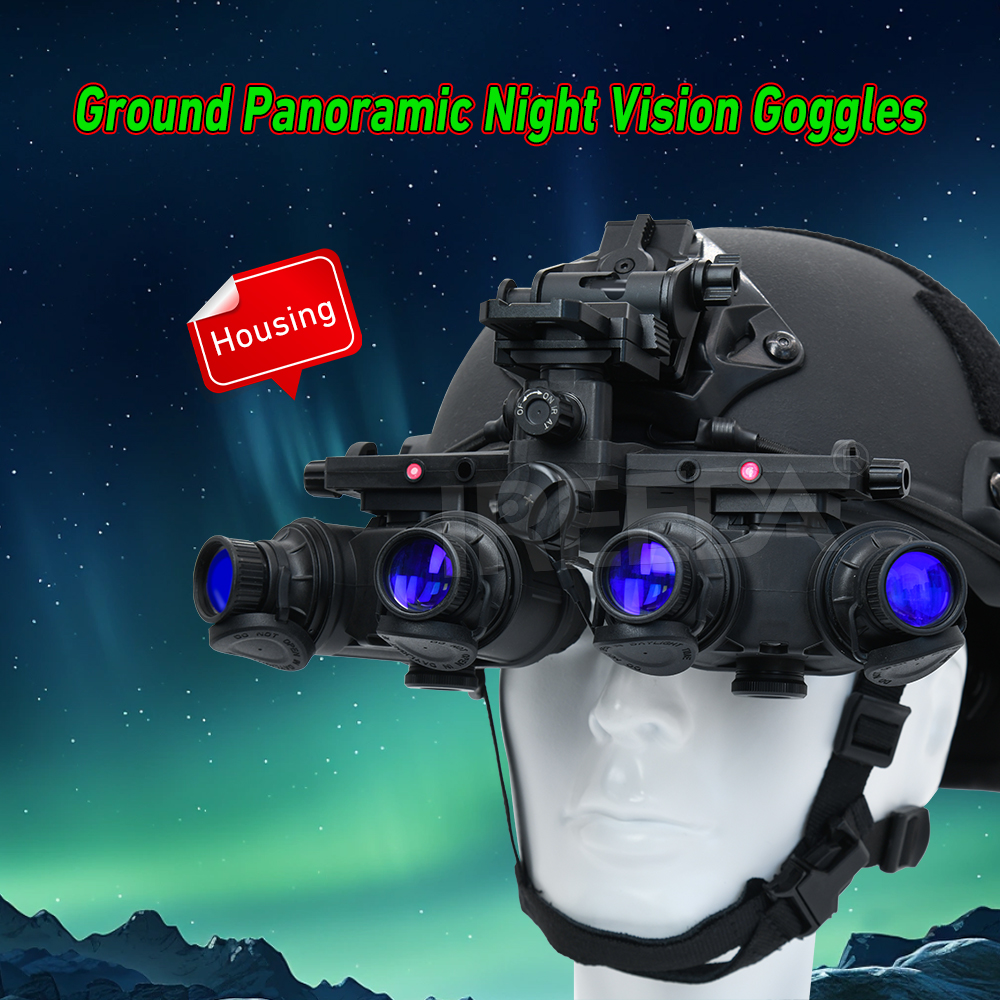
Structure and Design: Binocular night vision devices are generally equipped with two eyepieces and two objectives. Their design is closer to the natural structure of human eyes, and users observe through the two eyepieces when wearing them. In contrast, quad-eye night vision devices have four objectives and corresponding eyepieces, usually arranged in a square or rectangular shape, resulting in a more complex structure.
-
Field of View: The field of view angle of binocular night vision devices is typically around 40° - 60°. Thanks to their unique four-objective design, quad-eye night vision devices can provide an ultra-wide field of view of nearly 120°, covering most of the area in front of the user and greatly reducing blind spots. In complex environments, quad-eye night vision devices allow users to detect surrounding movements more quickly.
-
Wearing Experience: Binocular night vision devices are relatively lightweight, usually weighing between 300 - 600 grams, causing less burden on the head during long-term wear. Due to their complex structure, quad-eye night vision devices can weigh 800 - 1200 grams, requiring stronger support for the head and neck, and are more likely to cause fatigue during prolonged use.
-
Usage Scenarios: Binocular night vision devices are suitable for daily outdoor activities such as night hiking and hunting, as well as routine patrol tasks in some military and security fields. With their ultra-wide field of view, quad-eye night vision devices are more suitable for high-risk scenarios such as tactical operations and special forces combat, helping users quickly grasp environmental information and respond to unexpected situations.
-
Price and Cost: Due to the differences in structure and technical complexity, quad-eye night vision devices require higher investment in research and development and production processes. Therefore, their market prices are usually much higher than those of binocular night vision devices. Binocular night vision devices are more affordable, while quad-eye night vision devices often belong to high-end products, and their prices may be several times that of binocular night vision devices.