PVS14 vs PVS7: Key Differences Between Night Vision Devices
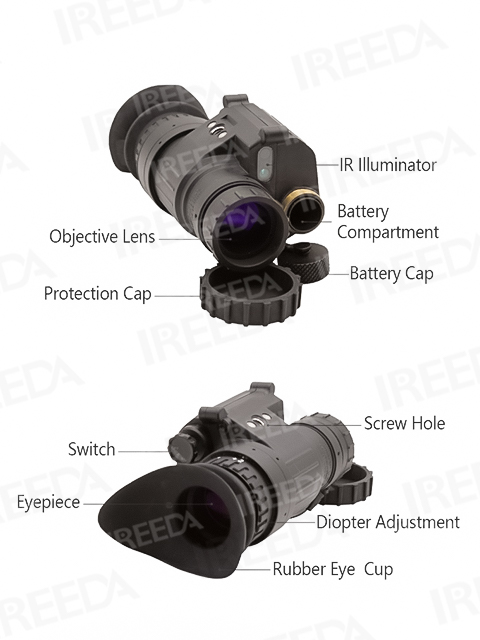
- PVS14: This is a monocular night vision device, meaning it has a single eyepiece and objective lens. It allows for one eye to have night vision, while the other can maintain natural vision, providing better depth perception and situational awareness.
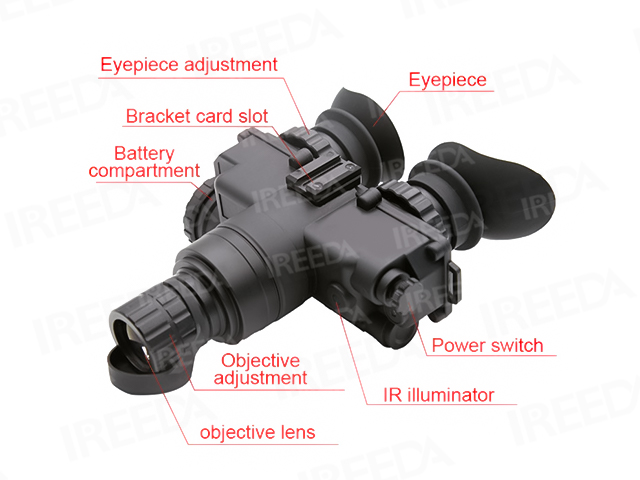
- PVS7: This is a binocular night vision device, which covers both eyes with a single intensifier tube that splits the image into two. It offers a more immersive view, but lacks the depth perception advantage of the PVS14.
1. Versatility
- PVS14: The monocular design of the PVS14 makes it more versatile. It can be handheld, mounted on a helmet, or attached to a weapon sight. Its flexibility allows it to be used for a wide range of activities, including navigation, observation, and target acquisition.
- PVS7: The PVS7 is typically used as a hands-free, helmet-mounted device. It is less flexible than the PVS14 in terms of mounting options and usage scenarios.
2. Weight and Size
- PVS14: Generally smaller and lighter, the PVS14 is more convenient for long-term use, especially in applications where mobility is crucial.
- PVS7: Slightly bulkier and heavier due to its dual eyepiece design, the PVS7 can be less comfortable for extended use.
3. Field of View (FOV)
- Both the PVS14 and PVS7 offer similar fields of view at around 40 degrees, meaning they provide similar coverage when observing a scene.
4. Power and Battery Life
- Both devices typically run on standard AA batteries and offer comparable battery life, depending on usage and environmental conditions. However, the exact duration can vary slightly based on the generation of the tube and features like autogating.
Summary
- The PVS14 is a more versatile, compact, and modern device, making it ideal for those needing flexibility, especially in tactical or civilian applications.
- The PVS7 provides a more immersive binocular view but is less adaptable in terms of usage and mounts, making it a solid choice for hands-free, helmet-mounted use.