Understanding NETD - Key Metrics for Night Vision Technology
Engineer Manager Name: Melin
WhatsApp/ Wechat: 0086-18291418396
E-mail: melin@ireeda.com
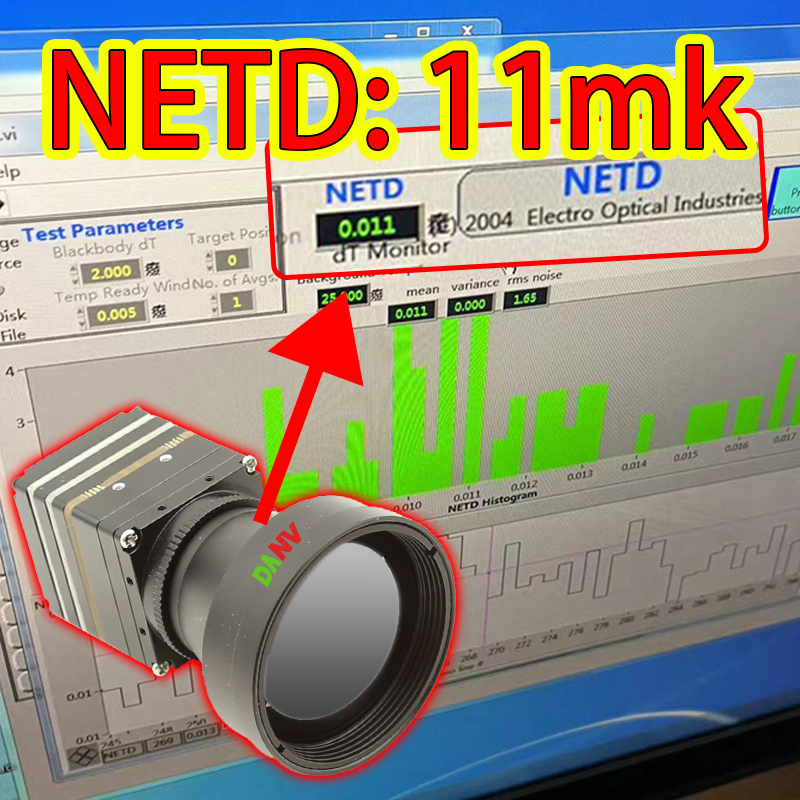
NETD, short for Noise Equivalent Temperature Difference, is the basic specification used to evaluate the sensitivity of thermal imaging cameras and other thermal systems. In this article, we’ll take a closer look at the concept of NETD and what it means in the world of night vision and thermal imaging.
Definition NETD: Noise Equivalent Temperature Difference (NETD) is a measure of a thermal imaging system’s ability to detect temperature differences between objects or scenes. NETD, expressed in degrees Celsius (°C) or Kelvin (K), quantifies the minimum temperature difference that a system can detect above the inherent electronic noise level. Simply put, it measures the effectiveness of a thermal imaging device in distinguishing small temperature changes in the environment.
Relationship between NETD and image quality: The lower the NETD value, the more sensitive the thermal imaging system. Devices with lower NETD can detect smaller temperature differences, resulting in clearer, more detailed images. On the other hand, higher NETD values mean that the device is less sensitive and may have difficulty distinguishing subtle temperature changes, resulting in less detailed and potentially noisier images.
Factors Affecting NETD: There are several factors that affect the NETD of a thermal imaging device. Some major contributors include:
Detector Technology: The type and quality of detector used in a thermal imaging system plays an important role in determining its NETD. Advanced detector technology often reduces NETD values and improves image quality.
Optics and lens quality: The efficiency of the optics and the quality of the lens coating affect the overall performance of a thermal imaging device, including its NETD.
Temperature Stability: Maintaining a stable operating temperature is critical to reducing noise and improving the NETD of a thermal imaging system.
Importance in night vision applications: NETD is particularly important in night vision applications because it directly affects the detection and identification capabilities of the thermal imager. For tasks such as surveillance, search and rescue, security and wildlife observation in low-light conditions, a lower NETD ensures better object recognition, increased range and enhanced situational awareness.
Compare NETD Values: When evaluating different thermal imaging devices, it is important to compare their NETD values to determine which one provides superior image quality. Always remember that lower NETD values mean better performance in challenging environments with minimal temperature differences.
NETD (Noise Equivalent Temperature Difference) is a basic indicator for evaluating the sensitivity and image quality of thermal imaging equipment. As a key factor in night vision applications, it plays a vital role in various fields from security and surveillance to industrial inspection and outdoor exploration. Understanding NETD enables users to make informed decisions when selecting thermal imaging equipment, ensuring they have the best tool to see clearly in the dark and beyond.
Why Choose Ireeda?
1.Deep Expertise
Working for 5 years with clients provides our team the experience needed to produce the highest standard products.Each product has
been repeatedly tested by professional engineers!
2.Robust R & D Capabilities
Strong Research & Development teamcommit to understanding and fast reacting to the feedback of our customers.
3.Fast Delivery
In-stock items shipped within 3 working days, and we guarantee a short lead time on customized products from prototype to a
one-stop solution.
Engineer Manager Name: Melin
WhatsApp/ Wechat: 0086-18291418396
E-mail: melin@ireeda.com