
Why There Is Blind Pixel For Thermal Imaging Devices?
MS. Melin,
WhatsApp:+86-18291418396,
Email: melin@ireeda.com
Non-uniformity is a common phenomenon in thermal detectors, and its mechanism model is difficult to establish. Moreover, the defect generation mechanisms of thermal detectors of different types and materials are different, so it is difficult to establish a unified and complete mathematics of thermal image non-uniformity model.
However, as far as the uncooled infrared focal plane detector thermal imaging system based on vanadium oxide material is concerned, the non-uniformity of the image mainly comes from the optical system, the microbolometer array and the readout circuit.
The first part is the influence of light path. For example, the thermal parameters of the lens drift, the central axis and the optical axis do not coincide, the transmittance is uneven, the effective field of view is limited, etc. The general phenomenon is that circular dark areas appear in the four corners.
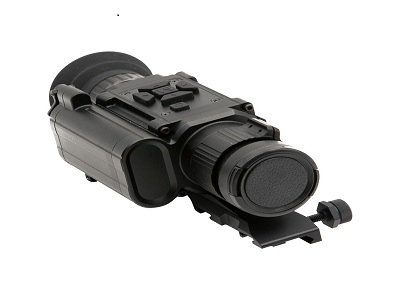
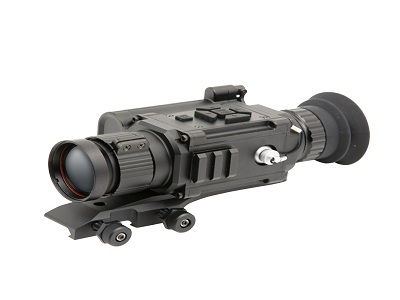
(This product is our TS335/RS675, go into the menu, we have pixel compensation function, non-uniformity correction, and we can customize image enhancement for you.)
The second part is the difference in optical, electrical and thermal properties of each pixel of the microbolometer array, which is also the main source of image non-uniformity. The cause is mainly due to errors in the processing technology, such as the effective area of each pixel of the infrared focal plane array, pixel resistance, bridge leg width, bridge deck thickness, etc., which makes the thermistor change characteristic curve and dark current inconsistent.
The third part exists in the readout circuit using CMOS technology. Due to process limitations, the capacitance and resistance will fluctuate within a certain range, and the length and width of the wiring are inconsistent, resulting in various exponential integration times, voltages, etc. of the readout circuit. There are differences in strength, signal delay, amplification, etc. The non-uniformity of infrared images is the cumulative result of the three factors.
Different from image defects caused by response non-uniformity, the manufacturing process of focal plane devices will also produce ineffective pixel that are far different from ordinary pixels in performance. In the infrared focal plane, they are generally called blind pixel. The number of blind elements directly reflects the manufacturing level of the focal plane. Qualified focal plane products are subject to strict constraints on the number and distribution position of blind pixel, especially in the field of high-end military applications of infrared. The blind pixel rate of the current military uncooled infrared focal plane must be less than 0.1% and distributed discontinuously.
The detection mechanism of the thermal detector determines the weak characteristics of the infrared image signal. At room temperature, the image signal of the human body is only between 3% and 5% of the entire dynamic range. It is difficult for the naked eye to detect changes in the infrared image caused by the target. Therefore, it is necessary to detect infrared images. The image is enhanced to adapt to the visual habits of the human eye. At the same time, the intelligent image enhancement algorithm can also make real-time adjustments based on the characteristics of the background and target.
Therefore, all thermal images, without exception, need to be preprocessed through three basic steps of non-uniformity correction, blind pixel compensation and image enhancement before they can be converted into images that can be recognized by the human eye.
Engineer Manager:
MS. Melin,
WhatsApp:+86-18291418396,
Email: melin@ireeda.com